
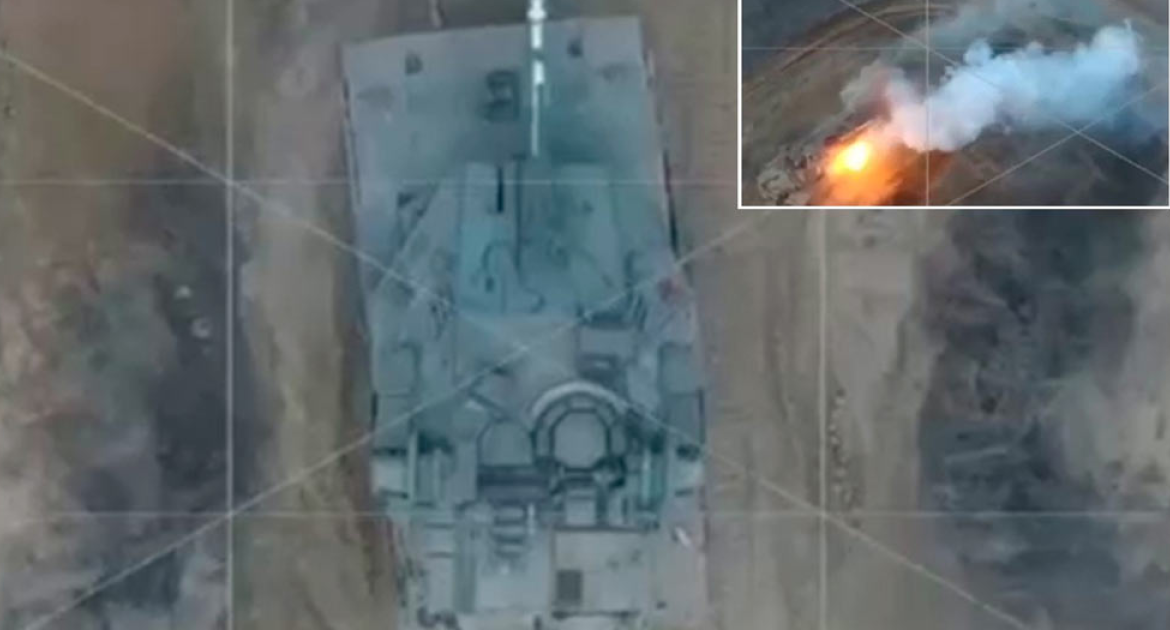
Iran Conflict Exposes Chinese Military Technology Failures


U.S. and Israeli strikes on Iran have demonstrated that Chinese military hardware does not perform as Beijing claims. Chinese-made air defense systems deployed in Iran were unable to intercept large-scale airstrikes, raising serious doubts about their combat effectiveness and damaging China’s credibility as an arms exporter.
Israel deployed around 200 fighter jets while the United States struck more than 1,000 targets using B-2 stealth bombers and Tomahawk cruise missiles. Iran failed to shoot down a single aircraft. According to Global Defense Corp, EA-18G Growlers destroyed three batteries of Chinese HQ-9B surface-to-air missiles (SAMs) and four YLC-8B anti-stealth radars in the first hour of the operation, with the HQ-9B system firing no interceptors and failing to detect incoming HARM anti-radiation missiles. The IAEA later confirmed that the Natanz nuclear facility sustained damage.
Iran had deployed China’s fourth-generation mobile radar, the YLC-8B, which Beijing first unveiled at the 2016 Zhuhai Airshow and claimed could detect U.S. F-22 and F-35 stealth fighters from 250 kilometers away. Chinese-origin JY-14 surveillance radars, alongside Iran’s indigenous Bavar-373 air defense system, also failed to down any coalition aircraft across more than 2,500 sorties. Post-strike analysis identified several technical weaknesses: software instability in targeting computers, poor resistance to radar jamming and spoofing, and an inability to share data across the broader air defense grid.
China had secretly supplied Iran with roughly $5 billion worth of weapons under an oil-for-weapons agreement, including 50 CM-302 supersonic anti-ship cruise missiles, three HQ-9B anti-ballistic systems, four YLC-9B radars, six HQ-16B surface-to-air missile systems, and 1,200 FN-6 MANPADS. Reports indicate that much of this hardware was destroyed on the first day of strikes. Iran fired 52 missiles and drones at the USS Abraham Lincoln strike group; U.S. Aegis destroyers intercepted all of them.
The CM-302 missiles failed mid-flight, either deviating from their targets due to guidance failure or failing to accelerate to Mach 3 in the terminal phase. Post-strike analysis attributed this to a design flaw: the missile relies on the same seeker as the C-802 but lacks a data link, satellite link, or active guidance in the terminal phase, receiving only a single tracking update at launch and no continuous radar data thereafter.
This was not the first time Chinese hardware failed in combat. During India’s Operation Sindoor in May 2025, Pakistan deployed Chinese-made radars and HQ-9B systems to protect key military installations, and they failed. Pakistan’s air force lost roughly 20 percent of its infrastructure, with analysts attributing the failure to over-reliance on an automated system easily disrupted by the volume of munitions India employed.
In January 2026, during Operation Absolute Resolve against Venezuela, Chinese-made JY-27A radar systems used by Venezuelan forces were disabled and failed to detect approaching U.S. aircraft before any missiles could lock on. China’s HQ-9B air defense system has now failed to prevent attacks in three separate conflicts, Iran, Pakistan, and Venezuela, with radar jamming cited as a consistent vulnerability across all three.
One significant analytical caveat applies to the Iran case. Multiple defense experts, including Xu Tianran and Joshua Arostegui of the U.S. Army War College, have argued there is no photographic evidence, no satellite imagery, and no U.S. or Israeli government confirmation that HQ-9B systems were ever deployed or delivered to Iran.
The Chinese Embassy in Israel denied that China had supplied Iran with the HQ-9B at all, stating that China never exports weapons to countries engaged in warfare. The broader failure of Chinese-supplied systems, JY-14 and YLC-8B radars, SF-200 drones, is widely reported and not meaningfully contested. The specific HQ-9B claims remain disputed.
Beijing’s public response combined denial with deflection. Chinese officials blamed user error in the Pakistan case, accusing the Pakistani military of a lack of professionalism, and reportedly asked Islamabad to conceal or destroy evidence of the HQ-9B’s failure. On Iran, Beijing framed the U.S.-Israeli operation as evidence of American unilateralism. Xi Jinping remained publicly silent on the failure of Chinese-supplied hardware.
Some Chinese voices were more candid. Retired PLA colonel Yue Gang publicly urged China to re-evaluate its military capability and shift from reverse-engineering to domestic technology development, stating that what is inside military hardware matters more than how it looks. Military commentator Song Zhongping said China lacks multi-domain warfare capabilities and trains its military using a Soviet-era model from the early 1950s, lacking coordination among forces.
Chinese international relations scholar Shi Yinhong said the strikes on Iran indicate U.S. military power is superior and that America’s methods of warfare have further evolved. Georgetown University professor Dennis Wilder described the Iran war as a potential wake-up call for the PLA comparable to the 1991 Gulf War, which had previously driven dramatic changes in Chinese strategy and doctrine.
Corruption within China’s defense industry compounds the hardware performance problems. As of late 2025 and early 2026, numerous top PLA commanders, including navy admiral Miao Hua, were removed or placed under investigation for embezzlement, bribery, and misappropriation of state assets, particularly within the Rocket Force and major defense enterprises. Analysts assess that systemic corruption has likely led to substandard equipment and hindered overall readiness.
Experts assess that the U.S. and Israel demonstrated overwhelming superiority in electronic and cyber warfare, intelligence gathering, and multi-domain military integration across land, sea, air, and space. John Culver, a former CIA senior analyst on China’s military, noted that China’s force looks highly capable on paper but has not been to war in a very long time, and its ability to conduct complex, large-scale integrated joint operations remains untested. China is assessed to be roughly a decade behind the United States in advanced military technology.
The reputational damage to Chinese arms exports is being assessed as severe. Countries including Egypt, Azerbaijan, Pakistan, and Iran spent billions on Chinese air defense systems. In Latin America, Peru, Argentina, and Uruguay have opted for U.S. systems instead; Argentina and Peru chose F-16s over China’s JF-17. The most consequential dimension is the Taiwan scenario. Every failure of Chinese-exported hardware in real combat is a data point U.S. and Taiwanese planners are studying closely. The CM-302’s guidance failures, if repeated in a Taiwan contingency, would put billions of dollars’ worth of Chinese naval vessels at serious risk.
China is studying the war through satellite and other forms of imagery, gathering millions of data points that will be analyzed with AI to identify weaknesses in its own equipment and to look for vulnerabilities in U.S. and Israeli capabilities. But turning those lessons into reliable, combat-effective systems will take time. Building the next generation of improved systems could take years. As a result, Beijing’s timeline for a Taiwan invasion may extend beyond the widely cited 2027 target.
The post Iran Conflict Exposes Chinese Military Technology Failures appeared first on The Gateway Pundit.