
American Journalist Wounded in Burma, Now the World’s Most Heavily Mined Country


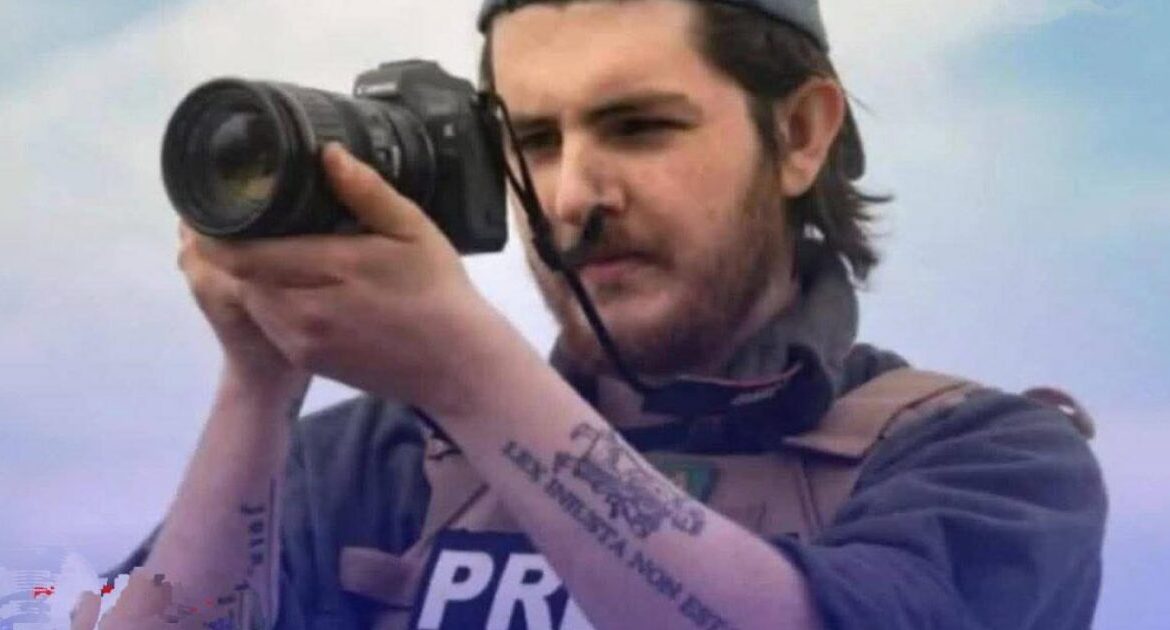
An American journalist, Collin Mayfield, was wounded in Chin State, Burma, after stepping on a toe-popper landmine. He lost two toes and part of his foot but avoided a full amputation and is now recovering in a hospital in India.
Mayfield, an established war correspondent known for his coverage of global conflicts and for producing the documentary series The Chin Resistance, had been embedded with the People’s Defense Force–Zoland in Tedim Township, northern Chinland. After spending roughly six weeks reporting with the unit, he was on a routine patrol near a recently abandoned police checkpoint close to Mount Kennedy when he stepped on the mine in an area previously seized by regime forces.
The incident highlights the extreme dangers facing journalists and the civilian population in Burma, which has become the world’s deadliest country for landmine casualties since the 2021 military coup. More than 300 civilians were killed or injured by landmines and explosive devices in the first six months of 2025 alone, according to UNICEF.
Demining and ordnance disposal could take decades, as large, well-funded international aid and demining organizations refuse to enter a country without the permission of the sitting government or to operate in an active war zone. Because it is the government itself that is laying most of the mines, permission is unlikely to be granted.
As a result, demining efforts are left to very small volunteer organizations and minimally trained resistance fighters with almost no equipment, sometimes using nothing more than a stick and a knife to extract deadly mines from the ground and attempt to deactivate them.
Jon Moss, a volunteer with Free Burma Rangers (FBR) who teaches demining in Burma, said the incident involving the American journalist was horrific but not unusual. While he was grateful the journalist survived, Moss stressed that landmines are a daily reality for civilians across the country.

“For civilians in Burma, landmines are a daily threat,” Moss said. “Families wake up to this kind of danger every morning. Stepping outside your house, walking on a path, or entering a field can mean death or permanent injury.”
Moss explained that landmine contamination is not a legacy issue from a past war but an active and expanding crisis tied to ongoing fighting. According to a report by the Myanmar Information Management Unit (MIMU), landmine and unexploded ordnance contamination has been recorded in 211 townships since 2020, up from just 48 townships during the 1999 to 2020 period.
“This is not an old problem,” he said. “It’s an active and expanding crisis in the world’s longest-running civil war.”
According to the Landmine and Cluster Munition Monitor, between 2020 and 2024 at least 2,029 people were killed or injured by landmines and explosive remnants of war (unexploded ordnance). Moss, however, pointed out that these figures are likely major undercounts, as most injuries go unreported, particularly in active conflict zones where tracking is limited or impossible. The numbers also exclude Burma Army soldiers and resistance fighters.
“These are not soldiers,” Moss said. “These are farmers. These are children. These are families.”
Drawing on his field experience, Moss described the constant fear faced by parents, especially mothers, who grip their children’s hands tightly while walking along paths or through fields, unsure whether a single misstep could be fatal. He said landmines are commonly found in rice paddies, jungle paths, near churches, and along streams where children once played.
Many of the mines, Moss noted, were laid as defensive measures and later forgotten, leaving them to serve no military purpose. Instead, they block access to food, water, work, and places of worship.
“Most people are injured doing ordinary things,” he said, such as planting rice, walking to the market, or gathering firewood. Children now make up a growing share of the victims, particularly from unexploded ordnance they find and later pick up.
Moss recalled meeting boys who had lost hands and girls who had lost legs while helping their parents in the fields. One case that stayed with him involved a 16-year-old Buddhist monk who was injured while walking up a mountain path to pray at his pagoda.
“Now he can’t walk to school,” Moss said. “His life is completely changed.”
He warned that the danger is compounded by the near absence of international demining organizations operating in these areas. As a result, villagers often attempt to clear landmines themselves using farm tools, sticks, or knives, a process Moss described as slow, reckless, and deadly.

“At the pace this is happening, it will take generations to make Burma safe again,” he said, warning that tens of thousands more civilians could be killed or maimed in the meantime.
Moss said he is now involved in a small pilot program that trains local teams and equips them with professional-grade detectors, protective equipment, and mechanical tools to clear land safely. Even so, he described the effort as bare-bones. Fuel costs are high, equipment is frequently damaged by repeated blasts, and funding remains extremely limited.
“Our funding only allows us to begin,” he said. “It doesn’t come close to meeting the scale of the crisis.”
Without support from the United States or private donors, Moss warned that incidents like the journalist’s injury will continue daily.
“The problem isn’t going to fix itself,” he said. “Supporting local demining teams is one of the most direct ways to save lives in Burma right now. The cost of inaction is measured in lost limbs, destroyed families, and futures that never get to begin.”
Moss, who previously served eight years as a U.S. Navy special operations officer and later worked as a Department of Defense officer, said his assessment reflects both his military background and his years of demining work in Burma.

The post American Journalist Wounded in Burma, Now the World’s Most Heavily Mined Country appeared first on The Gateway Pundit.