
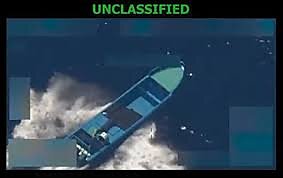
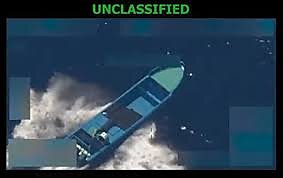
Over the past several months, the Trump administration has ramped up the War on Drugs by attacking boats from Venezuela that were allegedly bringing fentanyl to the United States. Much commentary has questioned the legality, humanity, and effectiveness of these measures and also expressed bewilderment at the relation between these actions and President Trump’s pardon of Juan Orlando Hernandez, the former president of Honduras, who was serving a 45-year sentence for cocaine trafficking.
Yet most discussion misses the fundamental point: the War on Drugs is, and always has been, a terrible policy.
Prohibition has only a modest impact on reducing drug use; instead, it generates underground markets and a broad range of attendant harms. These include increased violence, because black market participants cannot resolve standard disagreements with courts and lawyers; epidemics of overdoses, because quality control is difficult in underground markets; foregone tax revenue and wasted expenditure on enforcement; infringements on civil liberties; exacerbated racial tensions; phony excuses for restrictions on trade and immigration; limitations on medical uses of drugs; and, last but not least, reduced freedom for those who wish to use drugs.
Recent events still illustrate another negative: prohibition puts minimally restrained power in the hands of the executive branch, with predictable adverse consequences.
The crucial response to recent events is therefore the legalization of all drugs. Then, none of the recent controversies will ever arise again.
Cross-posted from Substack.