
Senior Trump Adviser Urges US to “Declare Victory and Get Out” of Iran Conflict

A senior adviser to President Donald Trump is urging Washington to seek a swift exit from the escalating conflict with Iran, warning that continued fighting could further destabilize the Middle East and continue to rattle the global market even worse than they already have.
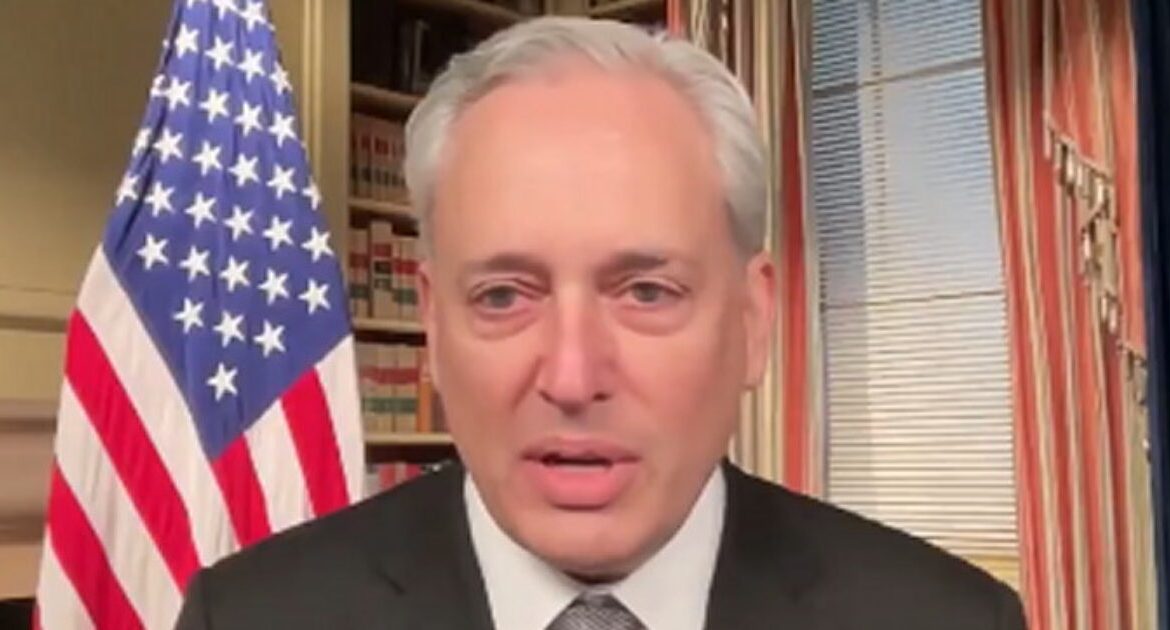
David Sacks, the White House adviser overseeing artificial intelligence and cryptocurrency policy, said the United States has already achieved significant military objectives and should now consider stepping back before the conflict widens further.
Speaking on the widely followed “All-In Podcast,” Sacks argued that the moment may have arrived for Washington to pursue an off-ramp rather than escalate further. “We’ve degraded Iranian capabilities massively,” Sacks said. “This is a good time to declare victory and get out.”
David Sacks says a faction in Washington is pushing Trump to escalate the Iran war even further.
His advice: “This is a good time to declare victory and get out.”
Because if the bombing shifts to Iran’s oil and energy infrastructure, Iran could respond by striking Gulf… https://t.co/W9HrN83MUx pic.twitter.com/MctdUD0Frg
— Mario Nawfal (@MarioNawfal) March 14, 2026


The remarks represent one of the clearest calls from a prominent Trump-aligned figure urging a negotiated exit from the conflict. Sacks framed the issue not in ideological terms but as a matter of strategic realism and American national interest. “If escalation doesn’t lead anywhere good, then you have to think about how you de-escalate,” he said, adding that de-escalation would likely involve a ceasefire or negotiated settlement.
The conflict began on February 28, when the United States and Israel launched coordinated strikes against Iranian military targets. Tehran responded with missile and drone attacks across the region, while its ally Hezbollah in Lebanon launched additional strikes against Israel.
The growing confrontation has already rattled financial markets and pushed energy prices higher. Oil prices have surged as investors brace for potential disruptions to Middle Eastern supply routes and infrastructure.
Iran’s ambassador to the United Nations says more than 1,300 people have been killed in Iran since the conflict began. Israeli authorities report 12 deaths from Iranian-linked attacks inside Israel, while the Anmerican military has confirmed that seven American service members have been killed during the fighting.
Despite those casualties, Sacks argued that Washington must carefully consider whether prolonging the conflict actually serves American strategic interests. Within the America First wing of the Republican movement, skepticism toward open-ended foreign wars remains strong.
Many national-conservatives argue that American foreign policy must prioritize sovereignty, stability, and the well-being of American citizens rather than drifting into prolonged regional conflicts. Sacks’ comments appear to reflect that cautious strain of thinking within the broader Trump coalition.
He warned that deeper escalation could unleash a cascade of consequences across the region. One scenario he described involves Iranian retaliation against Gulf oil infrastructure, which plays a critical role in global energy supply.
Even more alarming, Sacks suggested, would be attacks on desalination plants that provide drinking water across much of the Arabian Peninsula. “I think it’s something like 100 million people on the Arabian Peninsula that get their water from desal,” he said, warning that such strikes could trigger severe humanitarian and economic disruption.
Sacks also cautioned that prolonged missile exchanges could strain Israel’s air defense systems if the conflict drags on. The broader danger, he suggested, is that the war could spiral into a wider regional confrontation that becomes increasingly difficult to control.
He described Iran as possessing what he called a “dead man’s switch over the economic fate of the Gulf States,” referring to the country’s ability to threaten energy infrastructure and shipping lanes that are essential to the global economy.
Financial markets appear to be reacting to that risk. Oil prices have already jumped sharply since the conflict began, reflecting fears that prolonged fighting could disrupt critical energy supplies.
Sacks suggested that a rapid de-escalation could calm markets and reduce economic uncertainty. “This is clearly what the markets would like to see,” he said.
The geopolitical stakes became even more apparent after President Trump announced a major American bombing raid targeting Iran’s Kharg Island, one of the country’s most important oil export terminals. The facility handles roughly 90 percent of Iran’s crude oil exports.
Trump said American forces had “obliterated” military targets on the island. The strike underscored how closely military escalation and global energy markets are now intertwined.
BREAKING: Trump releases footage of US bombing on Iran’s Kharg Island, which handles 90% of the nation’s oil exports pic.twitter.com/i6liQnoNAG
— Rapid Report (@RapidReport2025) March 14, 2026
A wider conflict could threaten oil flows and intensify economic instability across much of the world. Inside Washington, however, the debate over how to proceed remains unsettled.
Some policymakers favor maintaining pressure on Tehran and continuing military operations. Others fear that a prolonged war could drain American resources while creating new strategic vulnerabilities. The divide reflects a broader shift within the American right. While national conservatives strongly support defending American interests and allies, many remain wary of repeating the mistakes of earlier interventionist eras.
Sacks’ intervention highlights that emerging debate. His argument is not that Iran should be trusted or appeased, but that strategic victories sometimes require strategic restraint.
In his view, the United States has already demonstrated its military power and deterrence. Continuing the war indefinitely could risk triggering instability that ultimately harms American interests.
The post Senior Trump Adviser Urges US to “Declare Victory and Get Out” of Iran Conflict appeared first on The Gateway Pundit.