
Before Trump’s Strikes: Iran and Its Proxies Had Been Attacking America for Over Two Decades


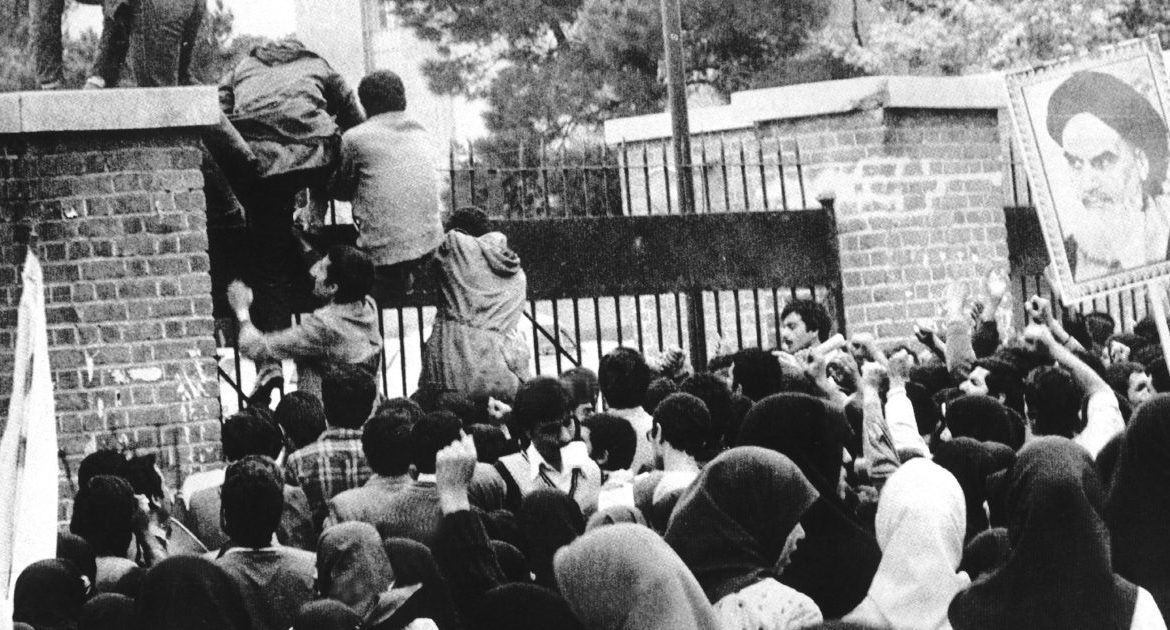
International media are framing the U.S. strikes on Iran as unprovoked, but the Iranian regime has been waging war against America through proxies, cyber operations, and direct strikes for decades. The “Death to America” chant has been a formal part of Iranian state ritual since 1979 and is still recited at official government functions. The late Supreme Leader Khamenei himself used it publicly as recently as 2024.
Iran’s constitution explicitly frames the Islamic Revolutionary Guard Corps’ mission as exporting the Islamic Revolution, which is inherently anti-American in its ideological framework. Iranian officials have described the United States as the “Great Satan” and framed conflict with America as a religious and civilizational obligation, not merely a political dispute.
Since the year 2000, Iran and its network of proxies, including Hezbollah, the Houthis, and various Iraqi militias, have carried out hundreds of kinetic and cyber attacks against U.S. personnel, assets, and international allies. The record is not exhaustive, as many attacks, especially cyber operations, go unreported or unattributed, but U.S. intelligence has consistently linked them to Tehran.
Kinetic and Terrorist Attacks
During the Iraq War from 2003 to 2011, Iran-backed Shiite militias such as Kataib Hezbollah and Asa’ib Ahl al-Haq were the primary actors against U.S. forces. The Department of Defense attributes at least 603 U.S. troop deaths to these groups, roughly one in six American combat fatalities in Iraq. The IRGC supplied them with advanced weaponry, most notably Explosively Formed Penetrators designed to pierce armored vehicles.
In January 2007, IRGC-affiliated militants disguised themselves as U.S. soldiers, infiltrated the Karbala Provincial Joint Coordination Center, and killed five U.S. soldiers. While the 9/11 Commission concluded Iran had no foreknowledge of the September 11 attacks, it found strong evidence that Tehran facilitated the transit of al-Qaeda members into and out of Afghanistan before the attacks, with some of those individuals among the future hijackers. Iran and Hezbollah had also provided training and advice to al-Qaeda in the years prior.
In January 2002, gunmen affiliated with the Iran-backed al-Aqsa Martyrs’ Brigade killed a U.S.-Israeli dual citizen in the West Bank. In October 2003, terrorists from the Iran-backed Popular Resistance Committees killed three U.S. diplomatic personnel in a bombing in Gaza.
On December 27, 2019, a rocket attack by Kataib Hezbollah killed an American civilian contractor at K-1 Air Base near Kirkuk and triggered a cycle of escalation. Days later, IRGC-instigated demonstrators and KH militants stormed the U.S. Embassy in Baghdad. Following the U.S. killing of Qasem Soleimani in January 2020, Iran launched more than a dozen ballistic missiles directly at Al-Asad Air Base in Iraq, the first direct Iranian military strike on a U.S. base in history. No Americans were killed, but 109 service members suffered traumatic brain injuries.
In March 2023, an Iranian drone struck a U.S. base near Hasakah, Syria, killing one American contractor and wounding five troops. In December 2023, Iran-backed militias wounded three U.S. service members at Erbil Air Base in Iraq. Between October 7, 2023, and January 27, 2024, Iran-backed groups launched 160 rocket, missile, and drone strikes against U.S. and coalition forces across Iraq, Syria, and Jordan.
Specific incidents included a drone strike on the al-Tanf garrison on October 18, 2023, injuring more than 20 Americans, and three separate strikes in a 24-hour period on November 8 at Al-Asad Airbase, Al-Harir Air Base, and near the Mosul Dam. On August 9, 2024, a kamikaze drone struck the Rumalyn Landing Zone in eastern Syria, injuring eight U.S. soldiers.
On January 28, 2024, Kataib Hezbollah launched a drone strike on Tower 22 in northeastern Jordan, killing three U.S. soldiers and injuring more than 40, the deadliest attack on U.S. troops in the region in roughly a decade. Between October 2023 and November 2024, Iran and its proxies conducted more than 180 attacks against U.S. forces in the Middle East, wounding more than 180 service members.
Since 2011, there have been 369 documented Iranian-backed attacks involving rockets, drones, and missiles against U.S. forces, with more than half occurring after October 7, 2023.
In June 2025, attacks resumed against at least three U.S. bases in Syria and two in Iraq, coinciding with the outbreak of the Israel-Iran Twelve-Day War. On June 23, 2025, Iran launched missiles directly at Al Udeid Air Base in Qatar, the forward headquarters of CENTCOM, in retaliation for U.S. and Israeli strikes on Iran’s nuclear sites. Following the joint U.S.-Israeli strikes that killed Supreme Leader Khamenei on February 28, 2026, four American service members were killed in attacks by Iranian forces or proxies, with others wounded as hostilities continued.
The Houthis in Yemen, supplied and directed by the IRGC, launched a sustained campaign against international shipping and U.S. naval assets beginning in November 2023. By February 2024, more than 40 vessels had been attacked; by mid-2024, the number exceeded 170. A senior Biden administration official stated the IRGC was involved in the planning, execution, and authorization of these operations. The IRGC also positioned an intelligence-gathering vessel to guide Houthi targeting of ships that had switched off their identification transponders.
The USS Carney intercepted four Houthi land-attack cruise missiles and 15 drones on October 19, 2023. Multiple U.S. MQ-9 Reaper drones were shot down, with NBC News reporting that Iran provided the Houthis with surface-to-air missiles to improve their air defenses. The Maersk Detroit, carrying U.S. military supplies, was among the vessels struck. Several ships were sunk, including the UK-owned Rubymar. By March 2024, more than 2,000 ships had diverted away from the Red Sea, imposing significant costs on global trade and U.S. allies.
In 2011, the IRGC Quds Force orchestrated a plot to assassinate the Saudi ambassador to the United States at a Washington restaurant; the FBI foiled it before any attack occurred. In 2022, the DOJ charged IRGC member Shahram Poursafi with plotting to kill former National Security Adviser John Bolton, offering $300,000 for the murder, with a separate $1 million offer targeting former Secretary of State Mike Pompeo, apparent retaliation for the Soleimani killing. That same year, U.S. authorities disrupted a plot to assassinate Iranian-American journalist Masih Alinejad in New York; two Iranian agents were convicted in March 2025.
In 2024, IRGC operative Asif Merchant was convicted of murder-for-hire after being sent to the United States to recruit hitmen to assassinate U.S. politicians and government officials. Also in 2024, the DOJ charged multiple individuals in a separate IRGC-directed scheme to assassinate President Trump; suspects were arrested before any attack occurred.
Iran’s cyber operations have targeted U.S. and allied infrastructure with increasing frequency and sophistication. From 2011 to 2013, IRGC-linked hackers carried out Operation Ababil, a series of DDoS attacks against 46 major U.S. financial institutions, including Bank of America, the New York Stock Exchange, and Capital One, overwhelming servers with up to 140 gigabits of garbage data per second and disrupting banking services for millions.
In 2012, the Shamoon wiper malware erased data from more than 30,000 computers at Saudi Aramco, crippling the world’s largest oil company; updated versions struck Saudi government and private-sector entities again in 2016 and 2017.
In 2014, Iranian hackers destroyed the computer systems of the Las Vegas Sands Corporation in retaliation for its CEO’s public opposition to Iran’s nuclear program. In 2015, the IRGC hacked the email and social media accounts of Obama administration officials, academics, and journalists. From 2016 to 2019, an Iranian hacking group targeted at least 18 U.S. government and private-sector entities across engineering, energy, finance, healthcare, and IT, including Fortune 500 companies. In 2018, the DOJ indicted two Iranians for ransomware attacks including one on Atlanta’s city government, and separately indicted nine hackers for stealing intellectual property from more than 144 U.S. universities, the Department of Labor, and the Federal Energy Regulatory Commission.
In 2020, Iranian operatives obtained voter registration data from at least one U.S. state and sent threatening emails to voters while impersonating the Proud Boys. In 2021, the FBI thwarted an Iranian-backed cyberattack targeting Boston Children’s Hospital. In 2022, IRGC-linked hackers carried out a destructive wiper attack on the Albanian government, a NATO ally, in retaliation for Albania hosting Iranian dissidents, making it the first nation to sever diplomatic ties over a cyberattack.
Between 2023 and 2024, IRGC-affiliated actors gained SCADA access to six U.S. water utilities serving more than three million people, with the technical capability in at least two cases to alter chemical dosing parameters. In 2024, Iran hacked the emails of Trump campaign staffers and IRGC-affiliated actors collaborated with ransomware affiliates to exploit organizations across the education, finance, healthcare, and defense sectors.
Following U.S. strikes on Iran’s nuclear facilities in June 2025, a spike in DDoS attacks targeted the global financial sector, and IRGC-affiliated hackers threatened to release sensitive emails stolen from Trump administration aides.
The pattern across all these categories reflects a consistent Iranian strategy of using proxy forces and asymmetric tools, kinetic, maritime, and cyber, to inflict costs on the United States without triggering a direct war. That strategy is now collapsing under the weight of Operation Epic Fury and the 2026 conflict.
The post Before Trump’s Strikes: Iran and Its Proxies Had Been Attacking America for Over Two Decades appeared first on The Gateway Pundit.