
Who Is the IRGC, and Why Is It Key to the Regime Change Calculus in Iran


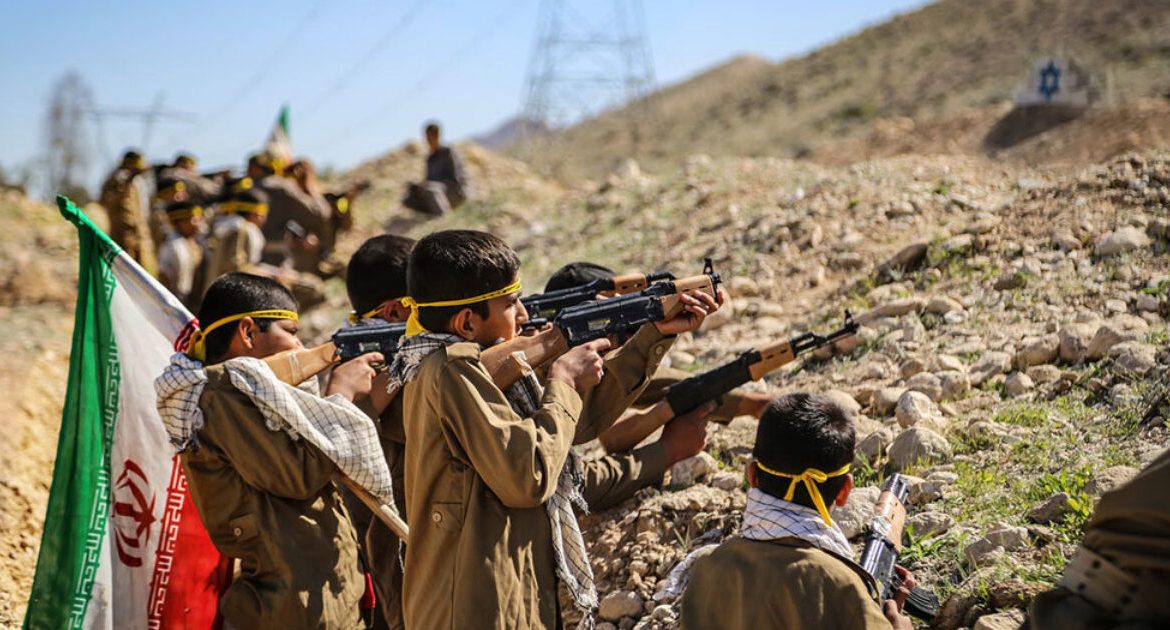
The Islamic Revolutionary Guard Corps is an armed force tasked with defending Iran’s regime and serves as the backbone of power for Ayatollah Khamenei. It is composed of ground, naval, and air forces, the internal Basij militia, and the IRGC–Qods Force, which conducts external operations.
The Qods Force is responsible for covert lethal activity outside Iran, including asymmetric and terrorist operations that Iran views as tools to deter adversaries, assert leadership over Shia Muslims, and project power across the Middle East.
The IRGC operates globally and provides training, funding, weapons, and operational guidance to partner militias and proxy groups, allowing Iran to maintain military capability across multiple theaters while preserving plausible deniability. The IRGC has an estimated 150,000 to 190,000 personnel, while the Qods Force numbers between 5,000 and 15,000 handpicked members selected for their loyalty to the regime. Its operations are primarily based in Iran but have focused heavily on Iraq and Syria, with activity extending worldwide, including into the United States.
The Qods Force targets U.S., Israeli, Saudi, and UAE interests, as well as Iranian dissidents, and has coordinated with criminal networks to support some operations. The IRGC has supplied advanced weapons to proxy forces, including air defense systems, cruise missiles, rockets, drones, IEDs, and explosively formed projectiles.
These transfers include support to Hamas, Hizballah in Lebanon, Shia militias in Iraq, and the Huthis in Yemen, whose IRGC weapons and training were used throughout 2024 to attack commercial shipping in the Red Sea.
Because the Iranian regime depends on the IRGC for internal control, regional power projection, and regime survival, eliminating the IRGC would leave the ayatollah vulnerable. With both the regime and the IRGC gone, Iran’s proxy groups would lose their economic, military, and political support, sharply reducing their effectiveness across the region.
Some analysts, however, suggest that “taking down” the IRGC would not be a clean military operation but a high-stakes gamble. If the clerical leadership were to fall, experts argue the IRGC would not dissolve but would instead abandon its Islamic façade and consolidate power as a military dictatorship.
Intelligence reporting from early 2026 indicates the Guard has contingency plans to recast itself as the only force capable of preventing Syria-style chaos, positioning itself as a stabilizing authority rather than a revolutionary arm of a collapsing regime. At the same time, efforts to dismantle the IRGC risk splintering the organization into violent, heavily armed factions that could disperse across the Middle East and launch terrorist attacks against the United States and its allies.
Another issue is the economic impact dismantling the IRGC could have on a new regime. The IRGC is not only a military force but also a corporate behemoth, controlling an estimated 30 to 40 percent of Iran’s economy, including ports, telecommunications, and construction. Without a plan to disentangle the economy from the Guard, any successor government would remain financially dependent on IRGC networks as the country continues to hemorrhage money.
Capital flight is already underway. Between December 2025 and January 2026, digital forensic data tracked more than $400 million in Tether moving out of Iran by mid-level regime officials. If the IRGC perceives an imminent threat or purge, senior cadres are likely to accelerate these transfers, inflicting further damage on an already fragile economy.
Attempting to remove the IRGC, or decapitate it by killing senior leaders, carries a “blind fire” risk. If central command breaks down, the IRGC’s 32 regional divisions could fracture into independent actors.
Thousands of precision-guided missiles and smart mines positioned along the Strait of Hormuz would then fall under local control. If mid-level commanders believe the regime is collapsing, they may sell these weapons to non-state actors or use them as bargaining chips for safe passage out of the country.
Even if forced from power, the IRGC would not necessarily cease regional operations. Built from the start as a parallel force designed for guerrilla warfare, it could transform into a “ghost proxy,” retreating into mountainous regions or across the Iraqi border while continuing to run proxy networks as a private mercenary force.
Recent reports from January 2026 confirm the IRGC has already deployed nearly 5,000 Iraqi and Afghan fighters to suppress domestic protests, demonstrating its willingness to treat the Iranian population as a battlefield and rely on foreign militias to ensure its survival.
So while removing Iran’s supreme leader, the ayatollah, and disbanding the IRGC would reduce support for regional proxy terrorist groups such as the Houthis, Hamas, and Hizballah, it could also create a fragmented new front of independent terrorist organizations made up of former IRGC members, continuing to destabilize the region.
The post Who Is the IRGC, and Why Is It Key to the Regime Change Calculus in Iran appeared first on The Gateway Pundit.