
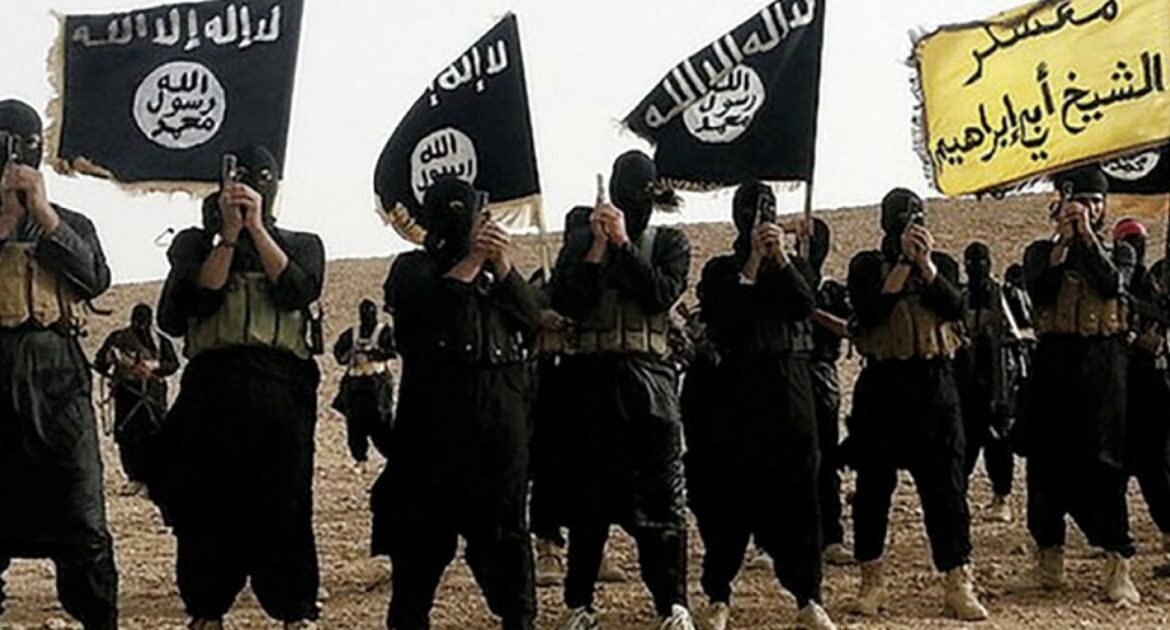


U.S. forces recently conducted strikes against ISIS targets in Nigeria as part of broader counterterrorism operations across the Sahel region. Extremist groups have expanded amid worsening security conditions, which have deteriorated in part due to President Biden’s withdrawal of U.S. counterterrorism troops from the region and the loss of U.S. access to bases in Niger and Chad.
Global terrorism deaths rose 22 percent to 8,352 in 2024, the highest level since 2017, even as the total number of incidents fell by 22 percent, indicating that attacks are becoming deadlier. ISIS remains the world’s deadliest terrorist organization in 2025, responsible for 1,805 deaths across 22 countries. Sub-Saharan Africa has overtaken the Middle East as the global epicenter of terrorism, with the Islamic State West Africa Province maintaining an estimated 2,000 to 3,000 fighters in the Lake Chad Basin.
ISIS activity has surged in the Middle East, particularly in Syria, where attacks tripled from roughly 230 in 2023 to nearly 700 in 2024. Across Iraq and Syria combined, the group claimed 153 attacks in the first half of 2024, putting it on pace to more than double its 2023 total. Syria now records the highest number of ISIS-related fatalities globally, tied with the Democratic Republic of Congo, underscoring the group’s renewed operational capacity.
Despite the collapse of its territorial caliphate in 2019, ISIS remains a serious threat in Syria and Iraq. Thousands of fighters are still active, while many more are held in prisons and detention camps vulnerable to mass breakouts. Political instability following the fall of the Assad regime in December 2024, combined with weak state control, sectarian violence, and rival armed factions, has allowed ISIS sleeper cells to regroup.
The group now operates as a decentralized insurgency, using remote desert and northeastern regions as safe havens, while economic collapse and sectarian massacres fuel radicalization and provide opportunities to regenerate manpower.
According to U.S. Central Command, sustained operations in Syria remain critical to preventing an ISIS resurgence. Working with Syrian partners, U.S. forces destroyed more than 15 ISIS weapons cache sites in southern Syria, eliminating mortars, rockets, firearms, anti-tank mines, and materials used to build improvised explosive devices. In a July raid in al-Bab, Aleppo Governorate, U.S. forces killed senior ISIS leader Dhiya’ Zawba Muslih al-Hardani and his two adult sons, all described as threats to U.S. forces, coalition partners, and the Syrian government.
The ongoing threat was underscored on December 13, 2025, when an ISIS infiltrator opened fire near Palmyra, killing two U.S. Army soldiers and a civilian interpreter and wounding three others. The attacker had joined Syria’s internal security forces as a base guard two months earlier and had reportedly been flagged for extremist views. The gunman was killed at the scene, marking the first U.S. combat deaths in Syria since 2019.
In response, the United States launched Operation Hawkeye Strike on December 19, 2025, targeting approximately 70 ISIS sites across central Syria. U.S. aircraft, including F-15s, F-16s, A-10s, Apache helicopters, and HIMARS, conducted strikes alongside Jordanian F-16s against ISIS infrastructure and weapons storage facilities in Deir ez-Zor, Raqqa, and near Palmyra, killing at least five ISIS members.
Defense Secretary Pete Hegseth described the operation as a “declaration of vengeance,” noting that in the days between the attack and the strikes, U.S. forces conducted 10 additional operations that killed or detained 23 ISIS operatives.
Overall, U.S. and partner forces have carried out nearly 80 operations in Syria since July, detaining 119 terrorists and killing 14 over the past six months. ISIS has inspired at least 11 plots or attacks targeting the United States in the past year. Analysts warn that reduced counterterrorism pressure, ungoverned spaces, and potential further U.S. troop withdrawals could accelerate ISIS’s resurgence. Without sustained security operations and political stabilization, ISIS is likely to continue exploiting Syria’s power vacuums to rebuild operational capacity.
ISIS-Khorasan has emerged as the most dangerous external-operations branch of ISIS. Operating primarily in Afghanistan and Pakistan, the group is based mainly in eastern Afghanistan along the Pakistan border, including Nangarhar and Kunar, with additional activity in northern provinces such as Balkh, Kunduz, and Badakhshan, and operations extending into Pakistan’s Khyber Pakhtunkhwa region. ISIS-K has also carried out or inspired attacks beyond the region, reaching into Tajikistan, Uzbekistan, Iran, and Russia.
The group was responsible for several high-profile mass-casualty attacks, including the March 2024 Moscow theater attack that killed 150 people and the January 2024 attack at a commemoration in Iran that killed 100. Multiple plots were disrupted in Europe, including a planned attack on a Taylor Swift concert in Vienna. The United Nations has assessed ISIS-K as the most significant transnational threat among all ISIS affiliates.
ISIS-K is estimated to field between 4,000 and 6,000 fighters and retains both the capability and intent to strike U.S. and Western interests abroad with little warning, potentially within six months, according to Gen. Kurilla. Its attacks are the deadliest of any ISIS branch, averaging 14 casualties per incident, and its recruitment pipeline draws heavily from Central Asia, particularly Tajikistan and Uzbekistan.
Terrorist attacks in the West jumped 63% in 2024. Europe saw attacks double to 67 incidents. The New Orleans attack in January 2025 killed 14 people. Youth radicalization is increasing, with several Western countries reporting one in five terror suspects under age 18. Teenagers account for most ISIS-linked arrests in Europe. Most attacks since 2014 have been carried out by individuals using guns, knives, and vehicles. Lone wolf actors are common, accounting for 93% of fatal attacks in the West over the past five years.
ISIS affiliates operate with greater autonomy, making the network resilient. The group uses social media and encrypted messaging for recruitment and radicalization. The organization has shifted toward decentralized recruitment and propaganda strategies, leveraging online platforms, migration flows, and social marginalization to radicalize and recruit individuals beyond the Middle East.
These methods extend ISIS’s reach into Western societies while strengthening transnational networks. For financing, ISIS relies on cryptocurrency, particularly Monero, alongside hawala networks, an informal money-transfer system operating outside traditional banking channels, as well as extortion and taxation. The United Nations has warned that territory stretching from Mali to northern Nigeria could fall under ISIS control. As security frameworks weaken, ISIS is positioned to expand regionally and link its operations with networks elsewhere, including across Africa.
The post Trump’s Nigeria Strike and the Resurgence of ISIS appeared first on The Gateway Pundit.