
In Depth Analysis: Trump Strikes ISIS In Nigeria on Christmas – Protecting Christians in the Wake of ISIS Resurgence


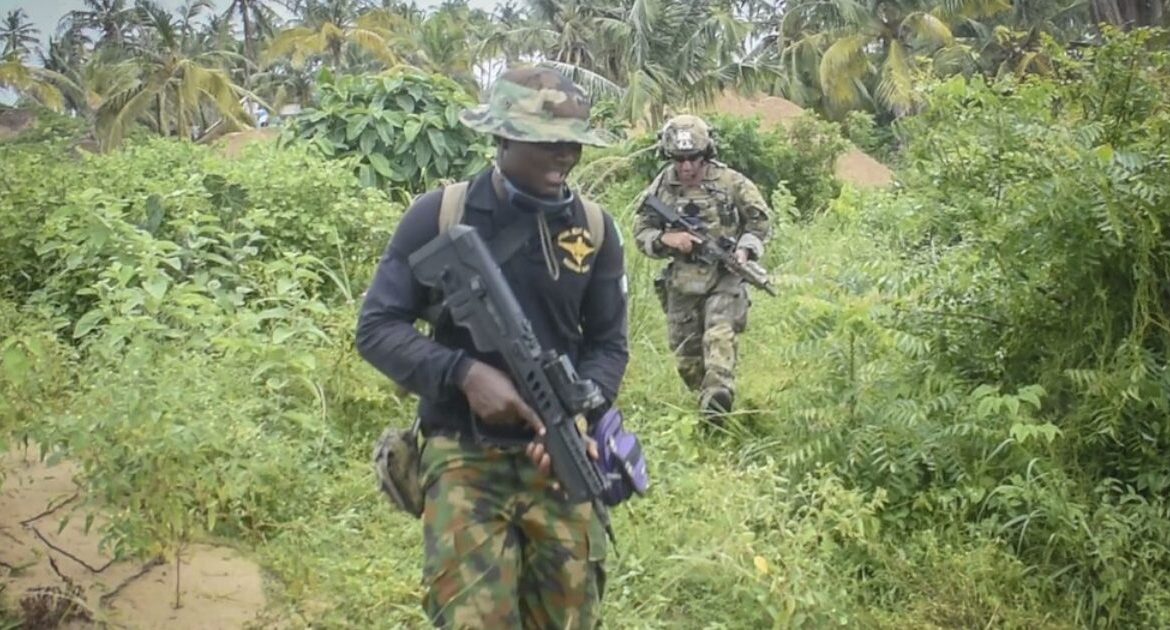
On Christmas night, President Trump ordered U.S. Africa Command (AFRICOM) to conduct airstrikes against ISIS targets in Sokoto State, northwestern Nigeria, near the Niger border. A U.S. official said Tomahawk missiles fired from a Navy vessel struck two ISIS camps. AFRICOM’s initial assessment reported that multiple ISIS terrorists were killed.
Defense Secretary Pete Hegseth indicated “more to come,” and Nigerian Foreign Minister Yusuf Tuggar confirmed this would be an “ongoing process” involving other countries. The Nigerian government provided intelligence support and coordinated closely with Washington, including repeated conversations between Tuggar and Secretary of State Marco Rubio. President Bola Tinubu approved the strikes.
Trump authorized the strikes to protect Christians, stating ISIS terrorists had been “targeting and viciously killing, primarily, innocent Christians, at levels not seen for many years, and even Centuries!” He had previously warned in November 2024 that the U.S. would enter Nigeria “guns-a-blazing” if Christian persecution continued, and ordered the Pentagon to prepare for possible military action.
Nigerian officials welcomed U.S. assistance against terrorism but rejected framing the violence as religious. Tuggar said the operation aimed to protect Nigerians of all faiths and counter terrorism across the Sahel, noting that many victims are Muslim.
Nigeria’s security crisis is driven by jihadist violence, communal and ethnic conflicts, and resource disputes. Armed Conflict Location & Event Data shows that from January 2020 to September 2025, attacks targeting Muslims killed 417 people, compared with 317 killed in attacks targeting Christians.
Nigerian officials declined to specify which group was targeted. Security analysts said the likely target was Lakurawa, a lesser-known ISIS-affiliated group that operates in Sokoto, Kebbi, and Zamfara states. Nigerian authorities designated Lakurawa a terrorist organization in January 2025.
Lakurawa’s origins trace back to 2017 when local communities in Sokoto invited armed fighters from Mali and Niger, mostly ethnic Fulani pastoralists, to protect them from bandit groups. Some arriving fighters had ties to ISIS in Sahel Province (ISSP), also called Islamic State Greater Sahara (ISGS). By 2018, these fighters shifted from protecting communities to imposing strict Islamic law. Recent UN reports confirm ISGS/ISSP affiliates now operate in northwestern Nigeria, having expanded from Niger’s Dosso region. Lakurawa now controls territory in multiple states and engages in killings, kidnapping, rape, and armed robbery.
The strikes occurred amid a broader security collapse across the Sahel, where extremist groups have expanded following reduced international counterterrorism efforts and the loss of U.S. access to key bases in Niger and Chad. Violence in northwest Nigeria increasingly involves bandit networks linked to jihadist organizations.
The Sahel now accounts for 51 percent of global terrorism-related deaths, up from 48 percent in 2023, with roughly 14,000 fatalities recorded in 2024 alone. During the first half of 2024, Mali, Burkina Faso, and Niger accounted for 7,620 terrorism-related deaths, a 190 percent increase from 2021. Five of the ten countries most affected by terrorism globally are now in the Sahel.
ISIS Sahel Province has expanded from an estimated 425 fighters in 2018 to between 2,000 and 3,000 by 2025, while Islamic State West Africa Province maintains a similar force strength in the Lake Chad Basin.
Sub-Saharan Africa has overtaken the Middle East as the global epicenter of terrorism. France’s withdrawal from Mali, Burkina Faso, and Niger created a security vacuum that ISIS quickly exploited, while military coups in Mali in 2021, Burkina Faso in 2022, and Niger in 2023 disrupted existing counterterrorism partnerships.
Under the Biden administration, the United States withdrew more than 1,000 troops from Niger between May and September 2024, handing over Air Base 101 in Niamey and Air Base 201 in Agadez, a $110 million facility operational since 2019.
Chad also requested the departure of U.S. Special Forces in April 2024, further degrading regional surveillance and strike capabilities. U.S. officials acknowledged the withdrawals left the United States without a persistent presence in the Sahel, forcing drone operations to relocate to Italy or Djibouti and sharply reducing time over targets.
Russia rapidly filled the vacuum. By April 2024, Russian military instructors had arrived in Niger following a defense agreement signed earlier that year, replicating a pattern already seen in Mali and Burkina Faso. Russian forces, rebranded from Wagner Group to Africa Corps, now operate in multiple Sahel states. Weak governance, corruption, underdevelopment in northern rural regions, and porous borders have enabled fluid militant movement between Mali, Niger, Burkina Faso, and Nigeria.
ISIS attacks in Syria nearly tripled from 2023 to 2024, rising from about 230 to nearly 700, making Syria the deadliest ISIS theater globally. Despite a decline in total incidents worldwide, terrorism deaths rose 22 percent in 2024 to 8,352, as attacks became fewer but deadlier. ISIS remains the world’s most lethal terrorist organization in 2025, responsible for 1,805 deaths across 22 countries.
ISIS-Khorasan has emerged as the most dangerous transnational branch, carrying out mass-casualty attacks in Moscow and Iran in 2024 and driving a sharp rise in Western attacks, including a 63 percent increase in the West and a doubling of incidents in Europe. The network’s resilience is reinforced by decentralized affiliates, online recruitment, youth radicalization, and illicit financing, while governance vacuums in Syria and the Sahel raise the risk of further territorial expansion.
Reactions inside Nigeria were divided. Some former officials welcomed the strike as relief that could improve security and restore freedom of movement, while others warned it signaled Nigeria’s failure to manage its own security and a loss of sovereignty.
The strikes marked the first direct U.S. military intervention in Nigeria and came as the Trump administration considers scaling back U.S. engagement in Africa, prompting concerns among some lawmakers about long-term stability and strategic influence in the region.
The post In Depth Analysis: Trump Strikes ISIS In Nigeria on Christmas – Protecting Christians in the Wake of ISIS Resurgence appeared first on The Gateway Pundit.